Field guide
The rules for Botmeister: how the bots work, what each hat and pad does, and how to play all fourteen games.
Field guide v0.1 · 2026-10-17 · The same text prints as the booklet in the box.
00About the game
Botmeister is a game of 24 small robots, the VV-Bots. Each bot does only what its brain hat tells it to do with what it sees. You choose the hats and place the light pads; the bots do the rest. There is no winner. Each game shows you how to make the swarm form a pattern, such as a knot, a ring or a chase, and what to look for. As you play, you learn which hats and pads make which patterns, and how to spot them.
Players: 1–4 · Age: 14+ · Time: a few minutes per game; one charge lasts about 30 minutes.
How to use this guide
- New players: read Your first game (chapter 02), then play the games in chapter 06 in order. Each one adds a single new idea.
- The games get harder to predict as you go: Easy, Medium, Hard and Expert.
- Chapter 07 has a game for experienced players. Chapter 08 is a one-page reference.
Safety and care
- Warning: small parts. Not suitable for children under 3 years.
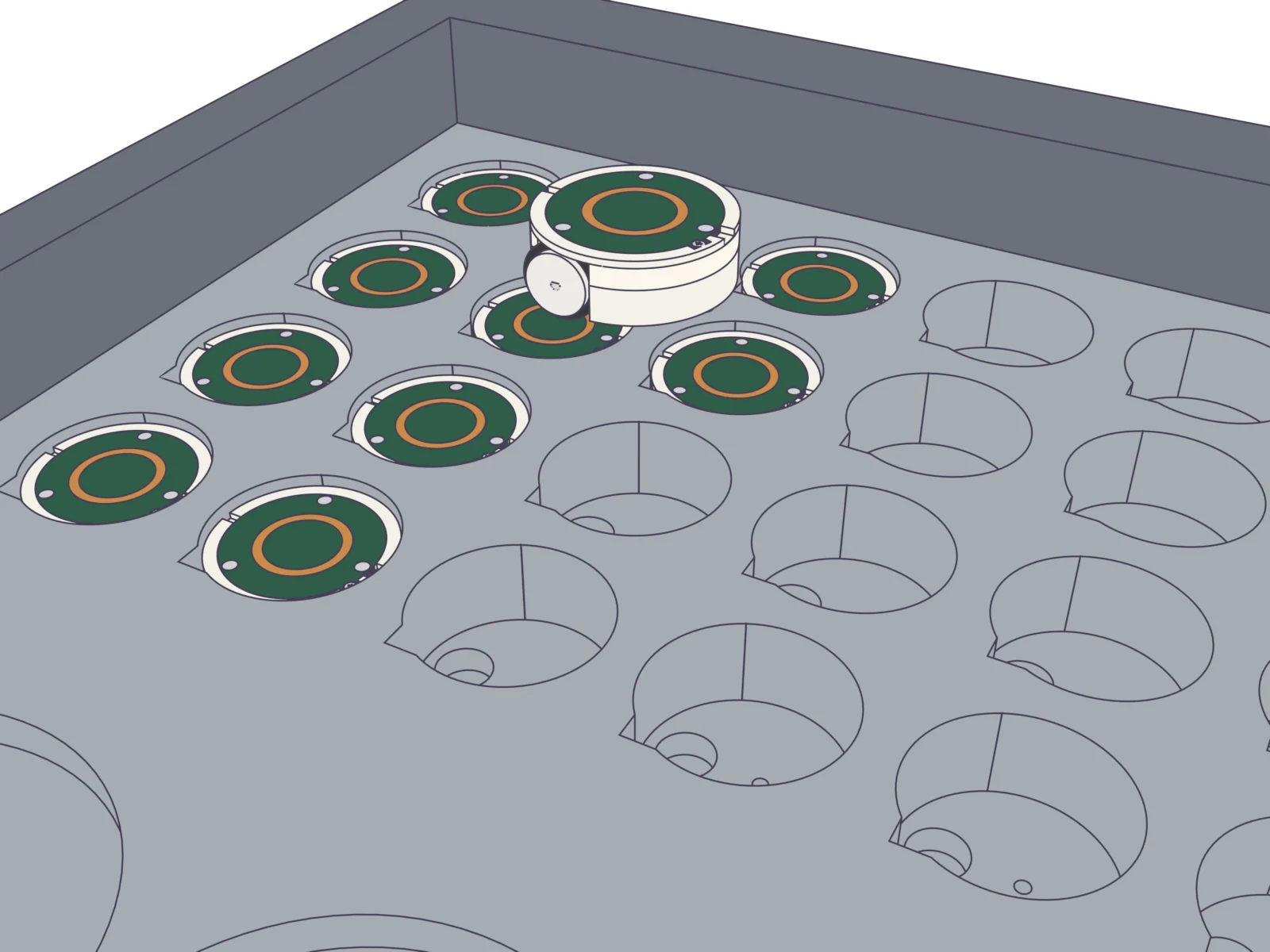
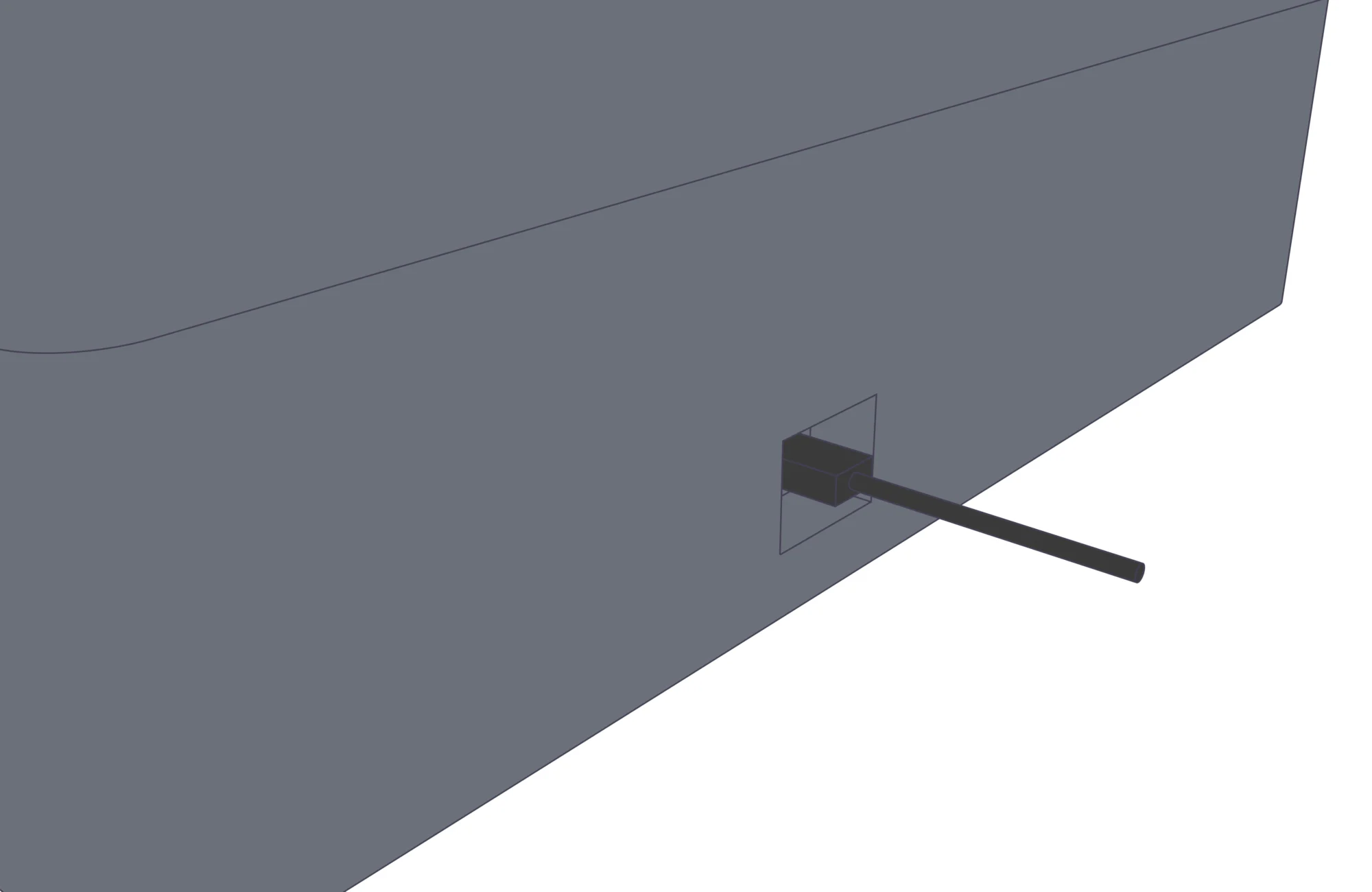
- Charging. Put every bot and pad in its pocket, close the lid, open the cover on the port at the end of the case and plug in the cable that came with the set. Connect the other end to a USB-C charger. Close the cover again when you unplug. Charge indoors, out of direct sun.
- Temperature. Never charge or play in direct sun, on a heater or in a hot car; keep within 0–35 °C. A bot that gets too hot slows down, then stops with its band pulsing red until it has cooled.
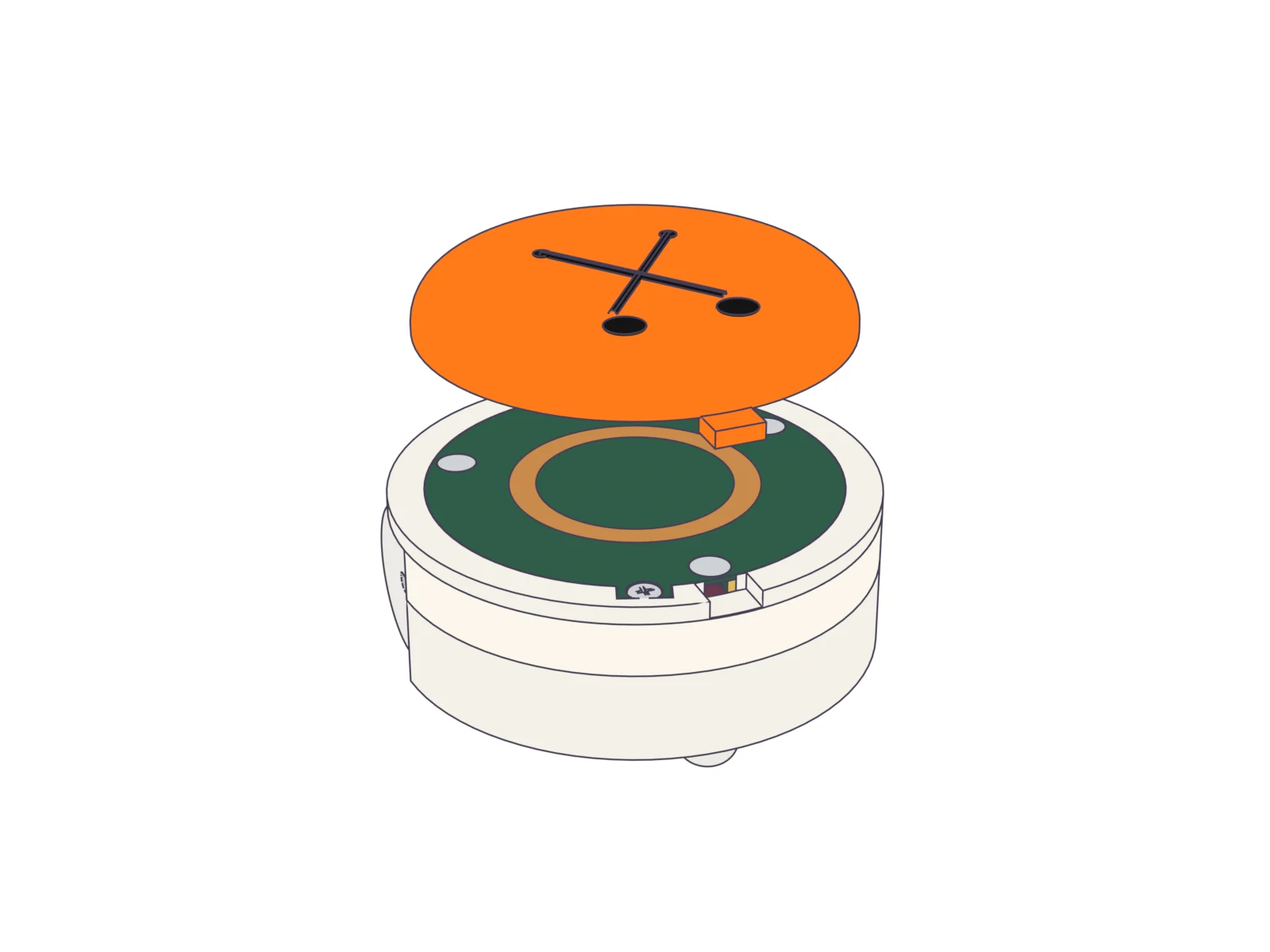
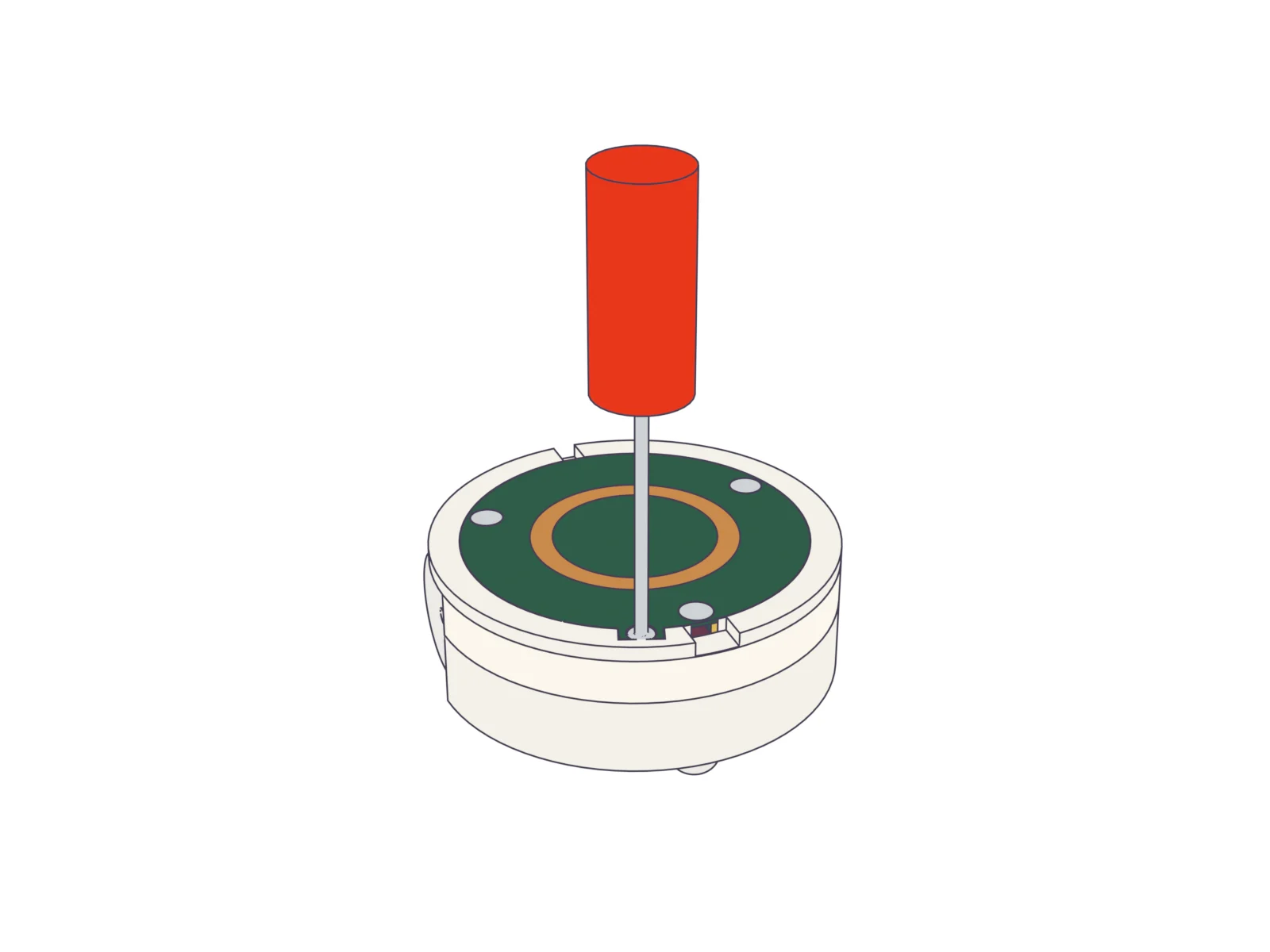
- Batteries. Each bot and pad has a small rechargeable battery under a cover held by one captive screw. An adult opens it with a small Phillips screwdriver (#0) to replace the battery. Use only replacement batteries made for the set.
- Care. Keep the bots away from water and direct sunlight. If the bots start to hesitate at the border, wipe their wheels and floor eyes with a dry cloth.
- Room. Play in any normally lit room. The bots respond to infrared signals from the pads and from each other, not to daylight or lamps.
01Components
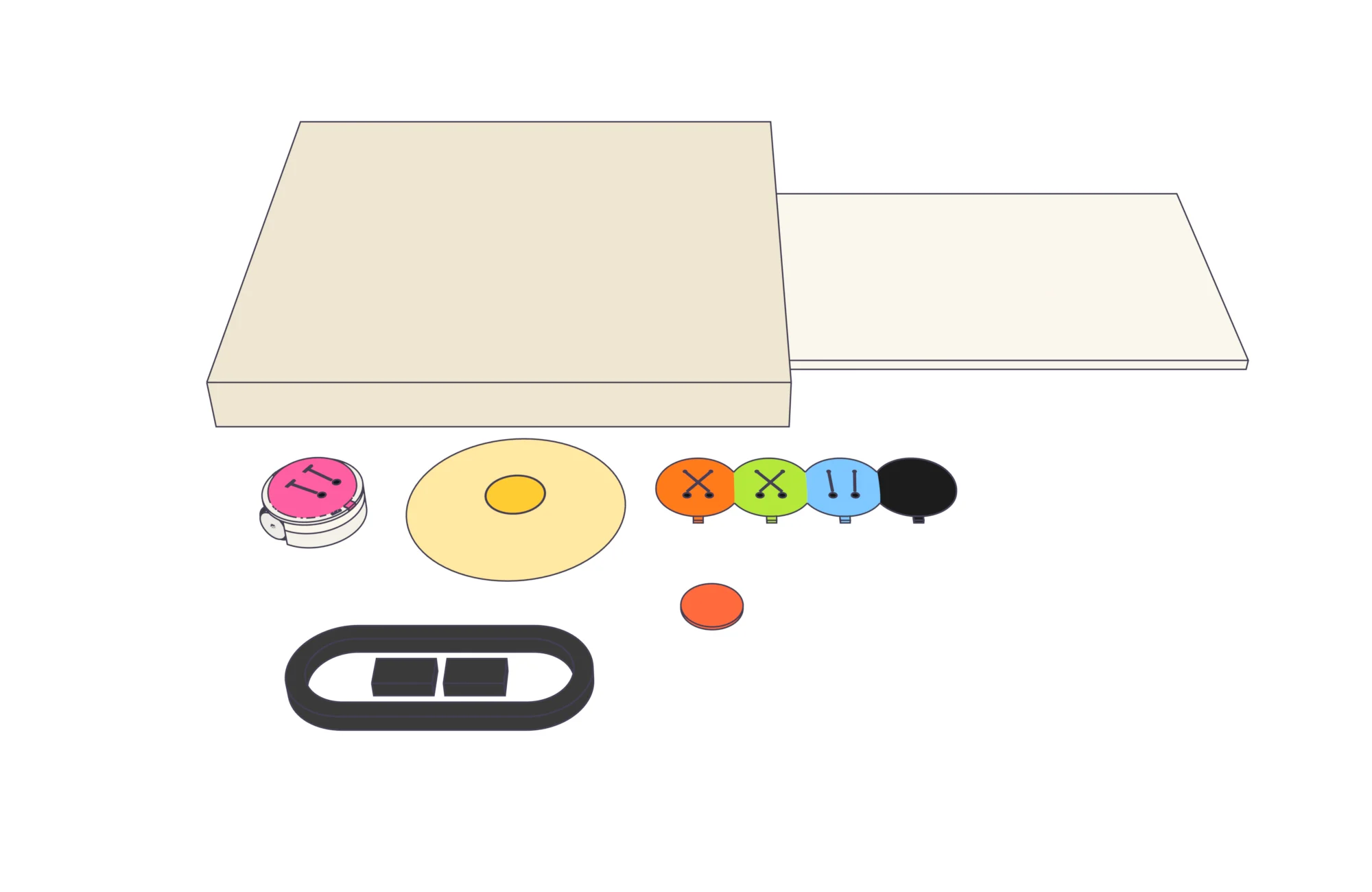
| Component | Number | Description |
|---|---|---|
| VV-Bots | 24 | Identical robots, about 40 mm across. A bot without a hat does not move |
| Brain hats | 48 | Six of each of eight kinds. The wiring is printed on top |
| Light pads | 6 | Flat lights the bots drive over. Each can be bright or dim, steady or pulsing |
| Signal hats | 8 | Two each of LIGHT, WARMTH, OXYGEN and FOOD. A signal hat decides what kind of light a pad gives |
| Blind hats | 6 | Blank hats for Uphill Analysis. The bot picks a brain at random each time one is put on |
| Mat | 1 | Felt, about 100 × 70 cm, with a black border |
| Case | 1 | A hard case that charges every bot and pad. The lid holds the hats |
| USB-C cable | 1 | 1 m, USB-C at both ends. It lives coiled in the case |
| Field guide | 1 | This guide |
You also need a USB-C charger with Power Delivery, 45 W or more. Charge the case indoors, between 0 and 35 °C, never in direct sun, on a heater or in a hot car.

02Your first game
This game takes about five minutes and shows how every game works.
Setup
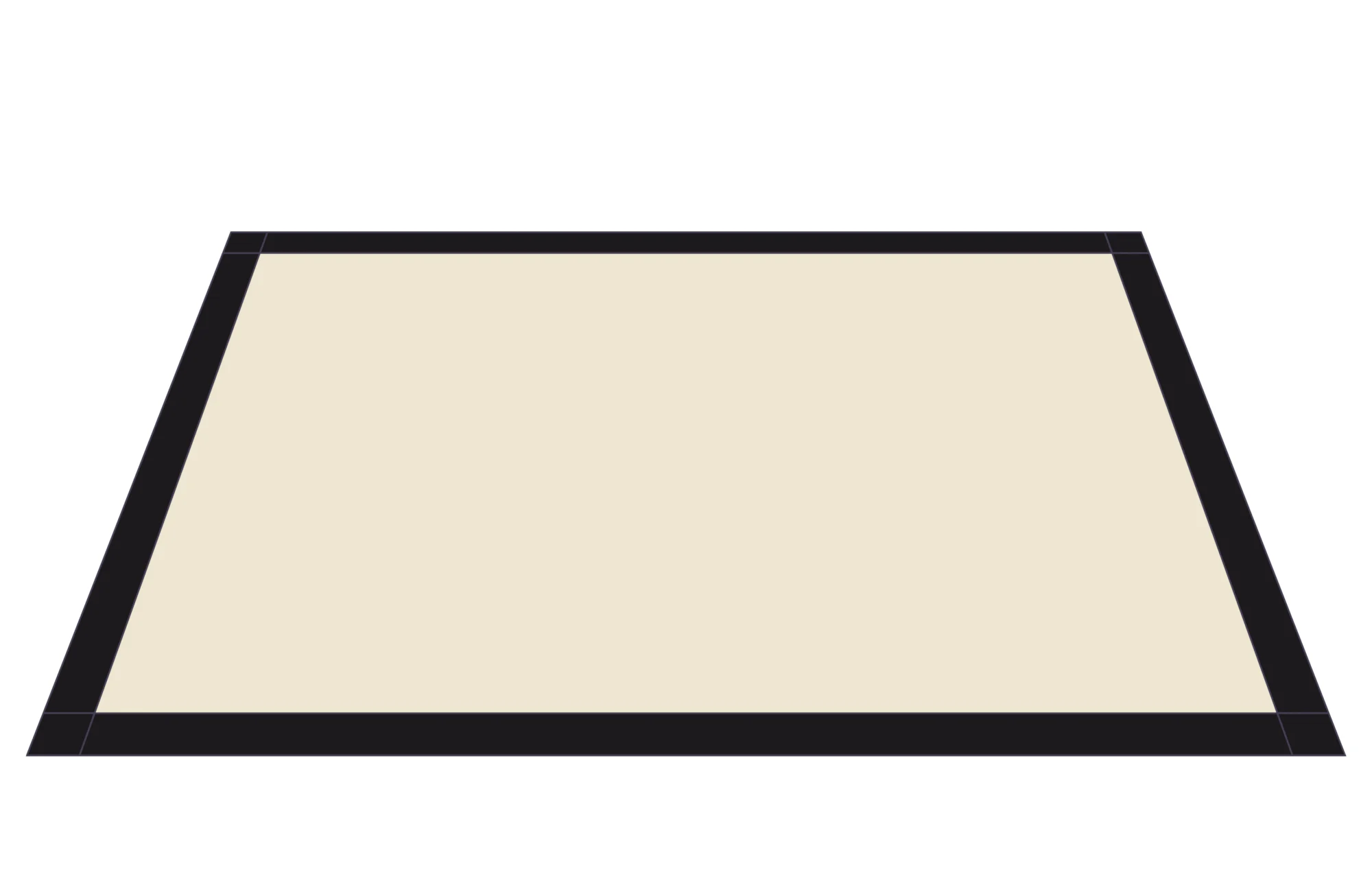
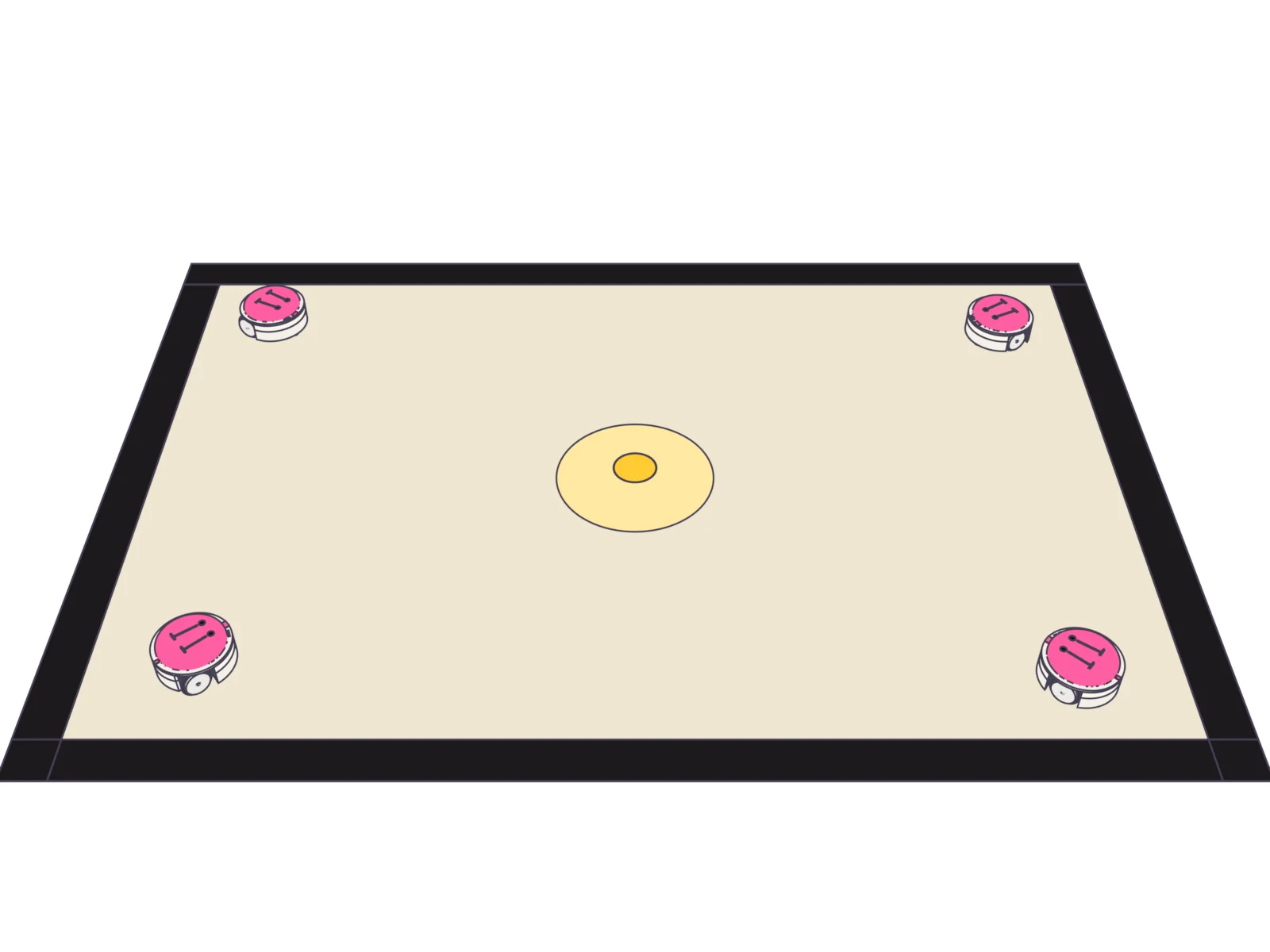
- Unroll the mat on a table or the floor, out of direct sun.
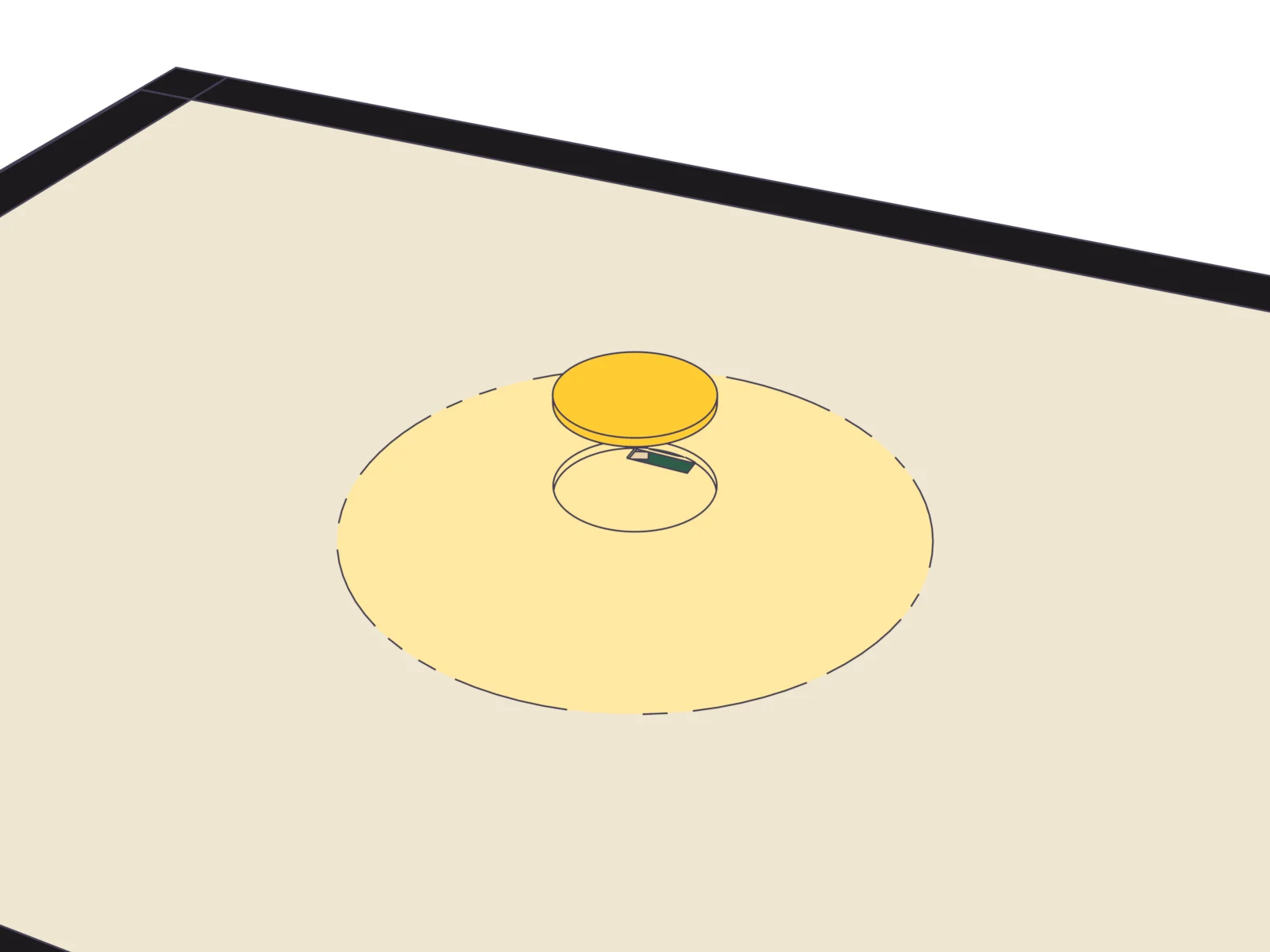
- Place one light pad in the middle of the mat. Put a LIGHT signal hat on it. Set the pad to bright and steady.
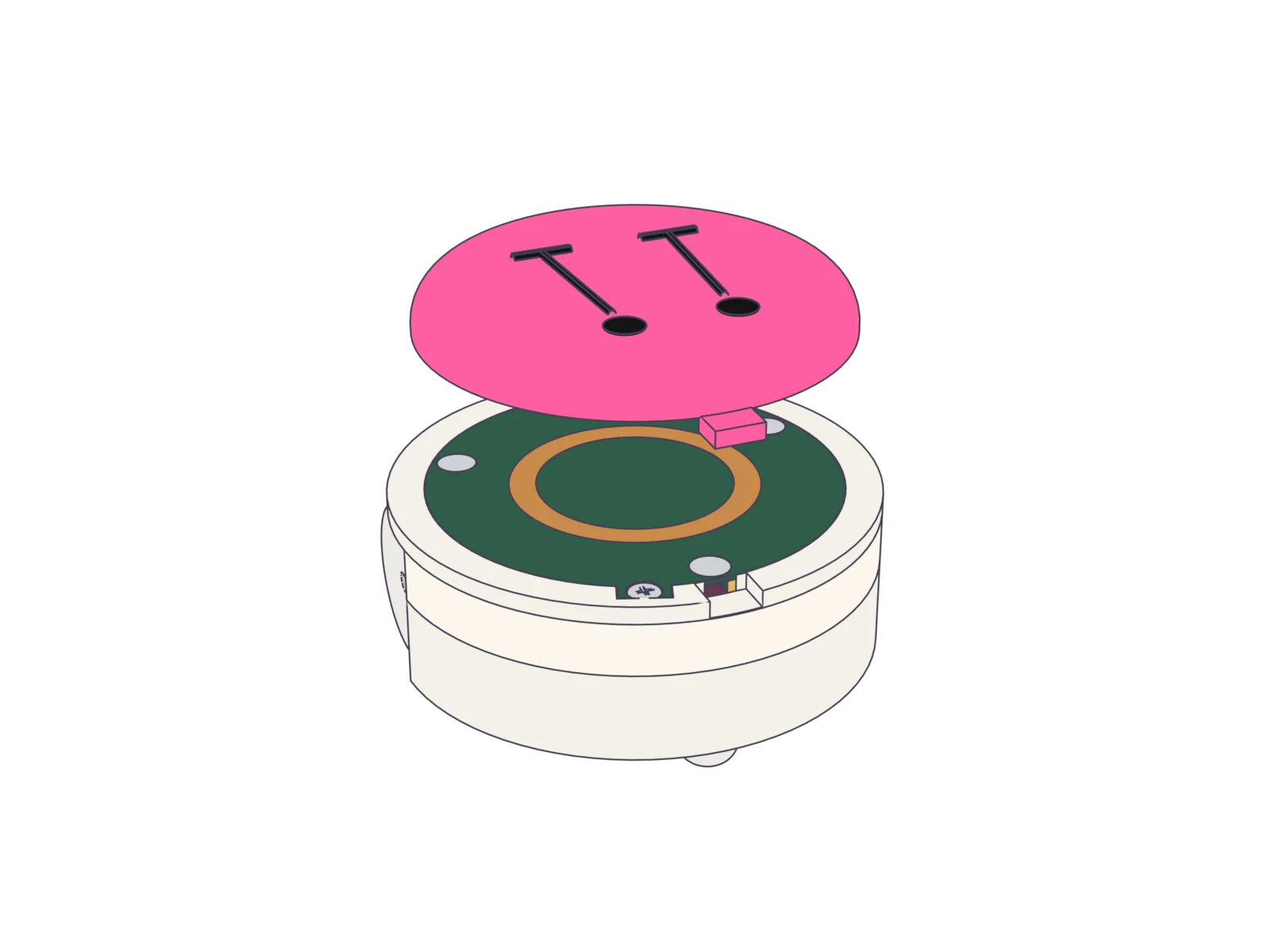
- Put a Lover hat (3a, pink) on four bots. Press each hat down until the band around the bot glows white.
- Set the four bots down near the border, facing any direction.
Play
Watch the Lovers. While the pad is far away, they drive fast. As they get closer, they slow down. Within a minute they stop on and around the pad and stay there.
Change one thing
Swap the hats on two of the Lovers for Coward hats (2a, blue). The two Cowards turn away from the light and drive off. The two Lovers stay.
That is how every game works: you choose the hats and the pads, and the bots' behaviour follows. Chapter 06 has thirteen games, starting with this one.
03How a bot works
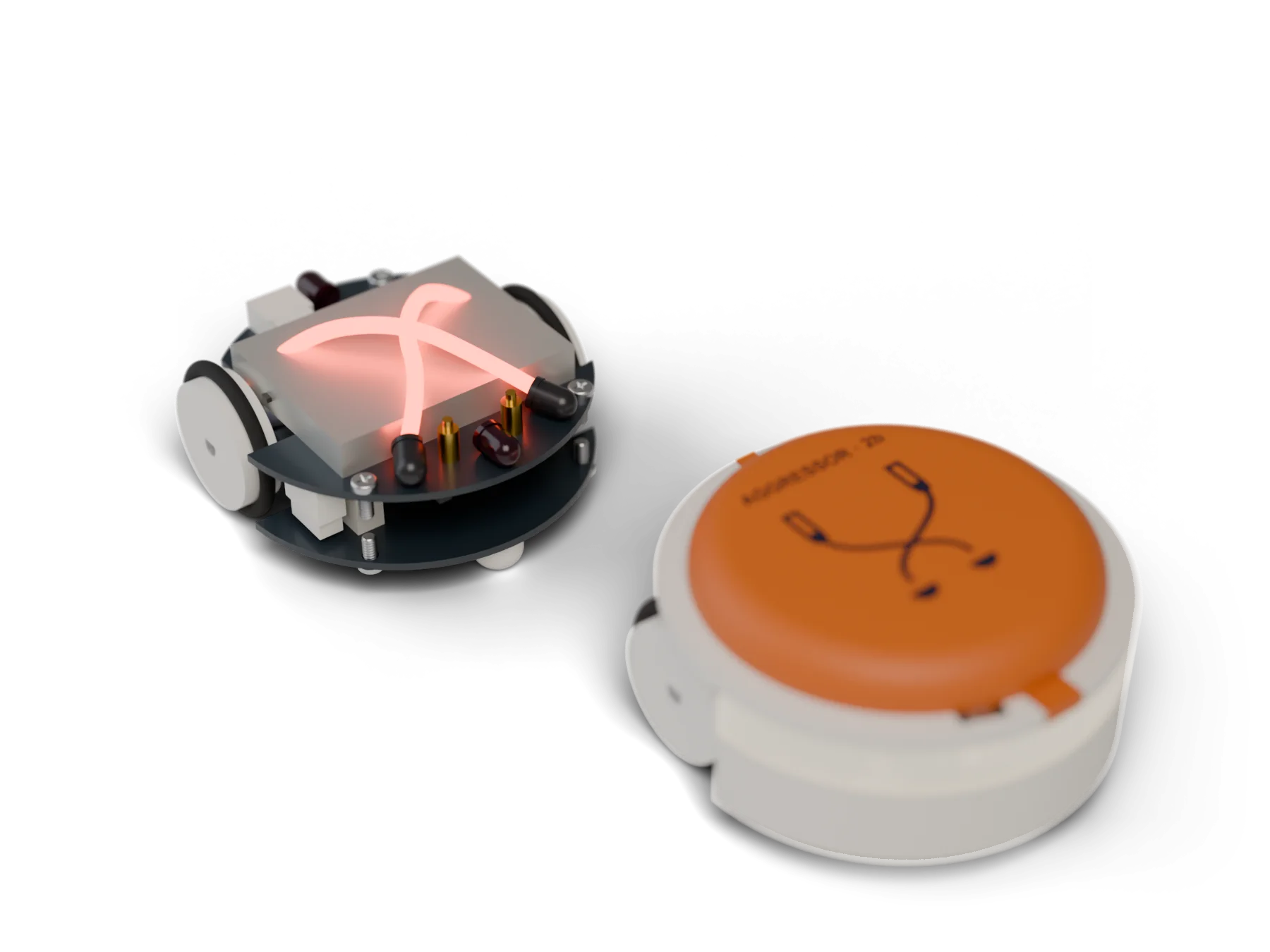
After Valentino Braitenberg, Vehicles (MIT Press, 1984).
In 1984 the brain scientist Valentino Braitenberg described a series of imaginary vehicles. Each had two eyes, two wheels and a few wires between them, and nothing else. He showed that even the simplest wiring makes a vehicle look as if it has feelings: wire it one way and it seems afraid of light; wire it another way and it seems to love it. VV-Bots are those vehicles, built.
Eyes, wires and wheels
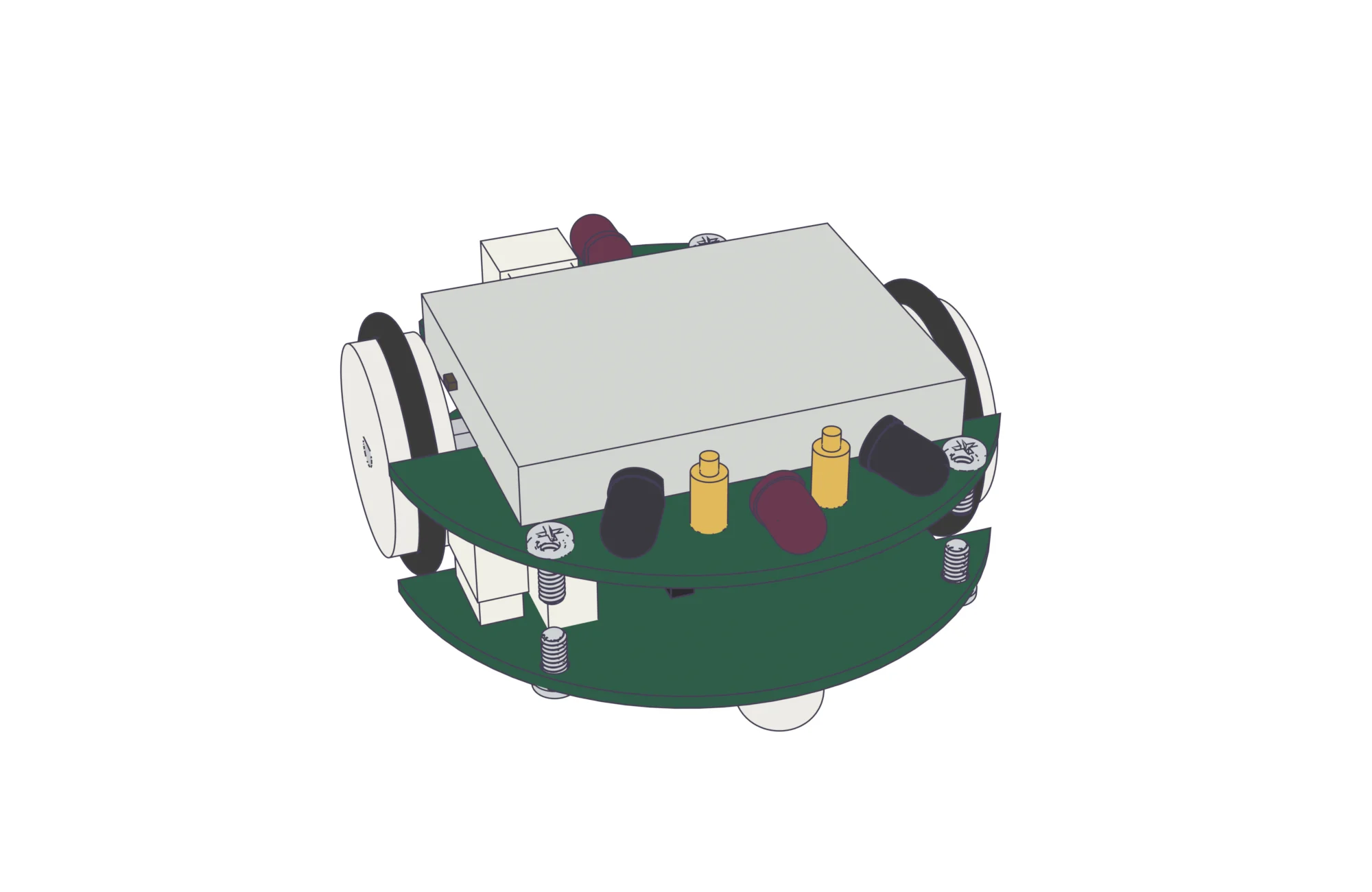
A VV-Bot has two eyes at the front, angled slightly apart, and a motor for each of its two wheels. Each eye is wired to a motor. The wiring is the bot's brain, and the hat decides the wiring.
- Straight or crossed. A straight wire joins each eye to the wheel on the same side. A crossed wire joins each eye to the wheel on the opposite side.
- Speed up or slow down. An exciting wire makes its wheel turn faster the more light the eye sees. An inhibiting wire makes it turn slower.
An example
A light is to the bot's left, so its left eye sees more than its right eye. - Straight and exciting (Coward): the left wheel turns faster, so the bot turns right, away from the light. - Crossed and exciting (Aggressor): the right wheel turns faster, so the bot turns left, toward the light, and drives into it.
The same two wires make one bot seem afraid and the other aggressive.
To try wirings of your own, make a hat: change the wires, watch a bot drive, and write the brain to a blank hat with your phone.
We will be tempted, then, to use psychological language in describing their behavior. And yet we know very well that there is nothing in these vehicles that we have not put in ourselves.
— Braitenberg, Vehicles, p. 2
Bots see each other
Every bot also gives off a light of its own, so the bots react to each other as well as to the pads. Each pad and each group of bots sends its own infrared signal, so a bot can tell a pad from another bot, and a LIGHT pad from a FOOD pad, even in a brightly lit room.
04The hats
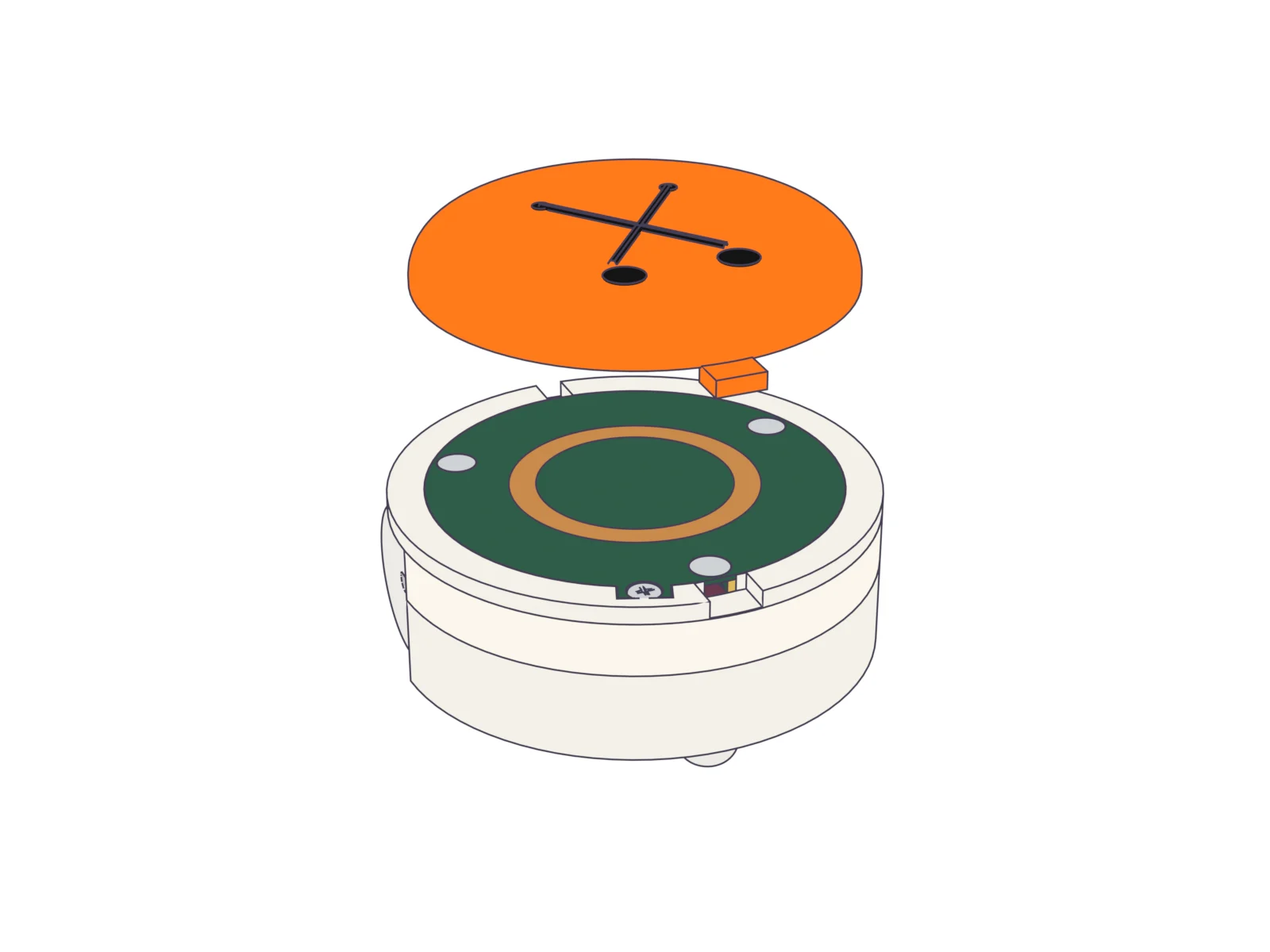
The top of each hat shows its wiring, drawn the way the book draws it: two eyes at the front and two wheels at the back. A dot at the end of a wire means it speeds the wheel up (exciting); a bar means it slows the wheel down (inhibiting). Each kind of hat has its own colour, so you can tell the bots apart across the mat. The bot’s band only ever glows white while it runs.
“If it is very small, its motion will be quite erratic, similar to “Brownian motion,” only with a certain drive added.” (p. 5)
“Vehicle 2a is a COWARD, you would say.” (p. 9)
“resolutely turns toward them and hits them with high velocity, as if it wanted to destroy them.” (p. 9)
“Vehicle 3a loves it in a permanent way, staying close by in quiet admiration” (p. 12)
“It likes the nearby source all right, but keeps an eye open for other, perhaps stronger sources” (p. 12)
“You cannot help admitting that Vehicle 3c has a system of values” (p. 12)
“it might orbit around the source at a fixed distance, like a satellite around the earth” (p. 16)
“These creatures, the observer would say, ponder over their decisions.” (p. 19)
05Pads and the mat
Light pads
- Signal hat. A pad's signal hat decides what kind of light it gives: LIGHT, WARMTH, OXYGEN or FOOD. Most games use LIGHT. A pad without a signal hat stays dark.
- Switches. Each pad has two switches: bright or dim, and steady or pulsing (on and off every few seconds).
- Driving over. Pads are flat. Bots drive over them and can tell when they are on one.
- Carrying a pad. You can pick up a lit pad and carry it a few centimetres above the mat. Bots that are drawn to it follow your hand. This is called leading.
The mat
- The border. When a bot's floor eye sees the black border, the bot turns back onto the mat. Explorers are the exception: they drive along the border for about eight seconds, round the corners, then head back in.
- Light in the room. Normal room light does not affect the bots. Direct sunlight on the mat can blind their floor eyes, and it heats the bots: play in the shade, between 0 and 35 °C.
06The games
Thirteen games in four levels: Easy, Medium, Hard and Expert. Play them in order; each one adds a single new idea. Every game page has the same parts: the goal, what you need, setup, how to play, what to look for, variants, why it works and troubleshooting.
Tip: fewer bots and a single bright pad make any pattern easier to see. Crowds make it harder.
Game 1 · Easy · Vehicle 3aGather
Goal: Bring the whole swarm to one spot.
- You need
- 6 bots with Lover hats (3a)
- Pads
- 1 pad: LIGHT, bright, steady
Setup
- Place one pad in the middle of the mat: LIGHT, bright, steady.
- Put Lover hats (3a) on six bots.
- Set the six bots down near the border, facing any direction.

How to play
The Lovers far from the pad drive fast. As they get closer, they slow down, and the last few centimetres take the longest. Within a minute they gather on and around the pad and stay still.
What to look for
Most of the Lovers resting together, within a hand's width of each other, on and around the pad.
Variants
- Set the pad to dim: the group forms more slowly and stays looser.
- Add a second LIGHT pad at the other end: the swarm splits between the two.
Why it works
An inhibiting wire slows the bot down the more light it sees, so it stops where the light is strongest.
staying close by in quiet admiration
— p. 12
Troubleshooting
- A bot never slows down: press its hat down until the band glows white.
- The bots stop far from the pad: check that the pad is set to bright and steady.
Next game. Scatter changes the wire from slowing down to speeding up, and the group becomes an empty space. 2 Scatter →
Game 2 · Easy · Vehicle 2aScatter
Goal: Clear the middle of the mat.
- You need
- 6 bots with Coward hats (2a)
- Pads
- 1 pad: LIGHT, bright, steady
Setup
- Place one pad in the middle of the mat: LIGHT, bright, steady.
- Put Coward hats (2a) on six bots.
- Set the bots down close to the pad, facing it.

How to play
Each Coward turns away from the light and drives off, faster the closer it started. The Cowards end up along the border, which turns them back, so they patrol the edge of the mat.
What to look for
An empty space around the pad, with the Cowards spread out along the border.
Variants
- Pick up the pad and move it into the group: the bots scatter away from your hand.
- Use two pads: the Cowards find the darkest part of the mat.
Why it works
With straight, exciting wires, the eye nearer the light speeds up the wheel on its own side, so the bot turns away and flees.
Vehicle 2a is a COWARD, you would say.
— p. 9
Troubleshooting
- Bots drive off the table: play on the mat; the bots need its black border.
Next game. Mill crosses the same wires, and the light that pushed the swarm away now pulls it in. 3 Mill →
Game 3 · Easy · Vehicle 2bMill
Goal: Make the swarm swirl around a light without ever settling.
- You need
- 6 bots with Aggressor hats (2b)
- Pads
- 1 pad: LIGHT, bright, steady
Setup
- Place one pad in the middle of the mat: LIGHT, bright, steady.
- Put Aggressor hats (2b) on six bots.
- Set the bots down around the mat.

How to play
The Aggressors turn toward the light and charge it. They drive straight over the pad, overshoot, turn and charge again, like moths around a lamp.
What to look for
Bots that never settle: each one crosses the pad, swings away and comes back again.
Variants
- Set the pad to dim: the passes slow down and get wider.
- Add two Lovers: they settle on the pad while the Aggressors keep driving through them.
Why it works
Crossed, exciting wires always turn the bot toward the light, and nothing tells it to stop, so it keeps charging past and coming back.
Vehicle 2b is AGGRESSIVE, obviously.
— p. 9
Troubleshooting
- Aggressors circle far from the pad: a bot that has driven past the pad cannot see it behind it. Give it a moment to turn.
Next game. Orbit changes how a bot responds to light: up close, the pull becomes a push, and the bots keep their distance. 4 Orbit →
Game 4 · Medium · Vehicle 4aOrbit
Goal: Make a ring of bots that keeps moving.
- You need
- 6 bots with Orbiter hats (4a)
- Pads
- 1 pad: LIGHT, bright, steady
Setup
- Place one pad in the middle of the mat: LIGHT, bright, steady.
- Put Orbiter hats (4a) on six bots.
- Set the bots down around the mat.

How to play
The Orbiters drive toward the pad, turn aside before they reach it, and settle into circles about 10 cm away, like satellites.
What to look for
A ring of bots circling the pad at about the same distance, never touching it.
Variants
- Move the pad slowly: the ring follows it.
- Set the pad to dim: the ring gets smaller.
Why it works
The Orbiter speeds up as the light gets brighter, but only up to a point; closer than that it slows again. That balance holds it at one distance.
like a satellite around the earth
— p. 16
Troubleshooting
- A bot drives across the pad: it arrived head-on. The ring forms within a few laps.
Next game. Sort puts two kinds of bot around one light, and they separate on their own. 5 Sort →
Game 5 · Medium · Vehicle 2Sort
Goal: Split a mixed swarm into a centre and an outer ring.
- You need
- 6 bots with Lover hats (3a), 6 bots with Coward hats (2a)
- Pads
- 1 pad: LIGHT, bright, steady
Setup
- Place one pad in the middle of the mat: LIGHT, bright, steady.
- Put Lover hats (3a) on six bots and Coward hats (2a) on six more.
- Mix the twelve bots up on the mat.

How to play
The Lovers settle on the pad. The Cowards move out toward the border. You get a full centre and an empty ring around it.
What to look for
Two kinds that have separated on their own: Lovers in the centre, Cowards on the outside, and an empty ring between them.
Variants
- Swap the Cowards for Aggressors: the centre becomes a scrum.
- Use more Cowards than Lovers: the empty ring grows.
Why it works
Two kinds of bot react to the same light in opposite ways, so they sort themselves with no one in charge.
Their characters are quite opposite.
— p. 9
Troubleshooting
- No clear ring: wait another minute. Cowards that start near the border take the longest to settle.
Next game. Tour asks the bots to visit several lights without stopping at any. 6 Tour →
Game 6 · Medium · Vehicle 3bTour
Goal: Get the bots to visit several lights without stopping at any.
- You need
- 6 bots with Explorer hats (3b)
- Pads
- 4 pads: LIGHT, bright, steady
Setup
- Place four pads near the four corners of the mat: LIGHT, bright, steady.
- Put Explorer hats (3b) on six bots.
- Set the bots down in the middle.

How to play
The Explorers slow down near each light, turn away from it and move on to the next. They rarely stop. When one reaches the border, it drives along the edge, round a corner, and comes back in near another light.
What to look for
Bots that keep moving from light to light, slowing at each one but stopping at none.
Variants
- Set one pad to bright and the others to dim: the bots stay a little longer at the bright one.
- Swap two Explorers for Lovers: the Lovers settle while the Explorers keep moving.
Why it works
Crossed, inhibiting wires slow the bot near a light and then turn it away, so it lingers but never stays. It looks like curiosity.
keeps an eye open for other, perhaps stronger sources
— p. 12
Troubleshooting
- Explorers stay in the middle: they are balanced between the lights. Move one pad closer.
Next game. Herd puts the light in your hand. 7 Herd →
Game 7 · Medium · Vehicle 4bHerd
Goal: Lead the swarm into a pen by carrying a pad.
- You need
- 6 bots with Aggressor hats (2b)
- Pads
- 1 pad: LIGHT, bright, steady
Setup
- Place one pad at the left end of the mat: LIGHT, bright, steady.
- Put Aggressor hats (2b) on six bots.
- Mark a pen at the right end of the mat with a scarf or a sheet of paper.

How to play
Pick up the pad and carry it slowly toward the pen, a few centimetres above the mat. The Aggressors follow it. Set the pad down inside the pen.
What to look for
A line of bots following your hand, and most of them ending up inside the pen.
Variants
- Lead Lovers instead: they are slower and stop when you stop.
- Lead with a pulsing pad: the group moves in surges.
Why it works
Any lit pad you carry becomes something to follow. The swarm goes where you take the light.
When you come close to them with a lure, it takes them some time to get going.
— p. 19
Troubleshooting
- The bots lose the pad: you are walking too fast. A bot cannot see a light behind it.
Next game. Figure Eight adds a second light and lets the bots choose between them. 8 Figure Eight →
Game 8 · Hard · Vehicle 4aFigure Eight
Goal: Keep bots travelling between two lights.
- You need
- 6 bots with Orbiter hats (4a)
- Pads
- 2 pads: LIGHT, bright, steady
Setup
- Place two pads about 30 cm apart: LIGHT, bright, steady.
- Put Orbiter hats (4a) on six bots.
- Set the bots down around the mat.

How to play
The Orbiters circle one pad, break away and loop around the other. If you traced their paths, they would make figures of eight.
What to look for
Bots that switch from one pad to the other and back, tracing loops around both.
Variants
- Move the pads farther apart: the bots switch less often.
- Set one pad to dim: its loop gets smaller.
Why it works
Two lights pull on the same bots, and their paths settle into a route nobody planned.
perhaps describing a trajectory in the form of a figure eight.
— p. 16
Troubleshooting
- The bots never switch pads: move the pads closer together.
Next game. Wait and Rush makes the swarm move as one. 9 Wait and Rush →
Game 9 · Hard · Vehicle 4bWait and Rush
Goal: Make the swarm move together, then stop together.
- You need
- 6 bots with Ponderer hats (4b)
- Pads
- 1 pad: LIGHT, dim, pulsing
Setup
- Place one pad in the middle of the mat: LIGHT, dim, pulsing.
- Put Ponderer hats (4b) on six bots.
- Set them in a ring about 25 cm from the pad, facing it.

How to play
While the pad is dark, nothing moves. A moment after it lights up, all six set off together and rush in. Set the ring up again and repeat.
What to look for
Complete stillness while the pad is dark, then the whole ring moving at once when it lights up.
Variants
- Make the ring wider: the farthest bots never decide to move.
- Set the pad to steady: the bots rush in once and stay.
Why it works
Every Ponderer waits for the light to pass the same threshold, so they all move at once without signalling to each other.
These creatures, the observer would say, ponder over their decisions.
— p. 19
Troubleshooting
- One bot never moves: it is facing away from the pad. Ponderers only react to what is in front of them.
Next game. Flock keeps a group together while it travels. 10 Flock →
Game 10 · Hard · Vehicle 3Flock
Goal: Make a group that travels together across the mat.
- You need
- 6 bots with Lover hats (3a)
- Pads
- 2 pads: LIGHT, bright, pulsing
Setup
- Place two pads at the two ends of the mat: LIGHT, bright, pulsing. Switch them on a few seconds apart, so one is lit while the other is dark.
- Put Lover hats (3a) on six bots.
- Set the bots down near one of the pads.

How to play
The group settles on the lit pad. When that pad goes dark and the other lights up, the group crosses the mat together and settles again.
What to look for
A group that crosses the mat together, with nobody leading, each time the lit pad changes.
Variants
- Use a shorter pulse: the group turns back halfway.
- Add a Coward: it follows the group at a distance.
Why it works
The bots never follow each other. They all react to the same changing lights, so they move as one group.
You will have no difficulty giving names to this sort of behavior.
— p. 12
Troubleshooting
- The group breaks up on the way: the pads are too far apart for the pulse. Move them closer.
Next game. Chase takes the pads away, and the bots become each other's lights. 11 Chase →
Game 11 · Expert · Vehicle 9Chase
Goal: Make bots chase other bots, with no pads at all.
- You need
- 6 bots with Aggressor hats (2b), 6 bots with Lover hats (3a), 6 bots with Explorer hats (3b)
- Pads
- None
Setup
- Use no pads.
- Put Aggressor hats (2b) on six bots, Lover hats (3a) on six and Explorer hats (3b) on six.
- Mix the eighteen bots up on the mat.

How to play
Each Aggressor steers toward the nearest Lover or Explorer, and the bot being chased turns away. In a crowd this is very hard to see.
Hint: Hard to see? Try 3 Aggressors and 1 Lover. It is the same chase, now readable.
What to look for
An Aggressor turning to follow a Lover or an Explorer, and the other bot turning away. Watch one pair at a time.
Variants
- Remove the Explorers: the chases last longer.
Why it works
Every bot gives off light, so the bots react to each other. With no pads, the swarm makes its own world.
we are no longer working on individuals taken by themselves but on the members of a community
— p. 47
Troubleshooting
- It looks random: that is the point of this game. Use the hint, then add bots back two at a time.
Next game. Landscape of Values gives one kind of bot four different lights. 12 Landscape of Values →
Game 12 · Expert · Vehicle 3cLandscape of Values
Goal: Make one kind of bot treat four pads in different ways: a home, a favourite and a place to avoid.
- You need
- 6 bots with Valuer hats (3c)
- Pads
- 1 pad: LIGHT, bright, steady; 1 pad: WARMTH, bright, steady; 1 pad: OXYGEN, bright, steady; 1 pad: FOOD, bright, steady
Setup
- Place four pads in the four corners, one of each kind: LIGHT, WARMTH, OXYGEN and FOOD, all bright and steady.
- Put Valuer hats (3c) on six bots.
- Set the bots down in the middle.

How to play
The Valuers make OXYGEN their home, keep driving over LIGHT, and stay away from WARMTH. FOOD hardly affects them.
What to look for
Valuers gathering at OXYGEN, passing over LIGHT now and then, and keeping clear of WARMTH.
Variants
- Swap the WARMTH and OXYGEN pads: the home moves with the signal hat, not the corner.
- Take the OXYGEN pad away and see where the bots settle instead.
Why it works
Each kind of light is wired differently, so the same bot is drawn to one, avoids another and ignores a third. Together they look like a system of values.
You cannot help admitting that Vehicle 3c has a system of values
— p. 12
Troubleshooting
- The Valuers gather at FOOD: check the signal hats. A LIGHT hat on the FOOD pad is the usual mix-up.
Next game. Full Swarm puts every kind of bot on the mat at once. 13 Full Swarm →
Game 13 · Expert · Vehicles 1–4Full Swarm
Goal: Free play with all 24 bots and five pads.
- You need
- 3 bots with Wanderer hats (1), 3 bots with Coward hats (2a), 3 bots with Aggressor hats (2b), 3 bots with Lover hats (3a), 3 bots with Explorer hats (3b), 3 bots with Valuer hats (3c), 3 bots with Orbiter hats (4a), 3 bots with Ponderer hats (4b)
- Pads
- 1 pad: LIGHT, bright, steady; 1 pad: WARMTH, bright, steady; 1 pad: OXYGEN, bright, steady; 1 pad: FOOD, bright, steady; 1 pad: LIGHT, dim, pulsing
Setup
- Place four pads in the corners, one of each kind, bright and steady, and a fifth pad in the middle: LIGHT, dim, pulsing.
- Put three hats of each of the eight kinds on 24 bots.
- Set all the bots down on the mat.

How to play
Groups, rings, orbits and chases, all at once.
What to look for
Everything at once. Pick one bot and predict where it will be in a minute, then check.
Variants
- Before you look at its hat, pick one bot and predict where it will be in a minute.
Why it works
With every kind of bot on the mat, the patterns overlap. Try to predict one bot before you look at its hat.
you will be delighted by their complicated trajectories.
— p. 17
Next game. Uphill Analysis (chapter 07) hides the hats.
07Advanced game: Uphill Analysis
For players who know every hat. This time you cannot see what is driving the bots.
1–4 players · 10 minutes per round
Goal: work out the brain inside each blind hat by watching the bot.
Components: 12 bots, 4 blind hats, 8 brain hats of any kinds, 1 light pad with a LIGHT hat, paper and pencil.
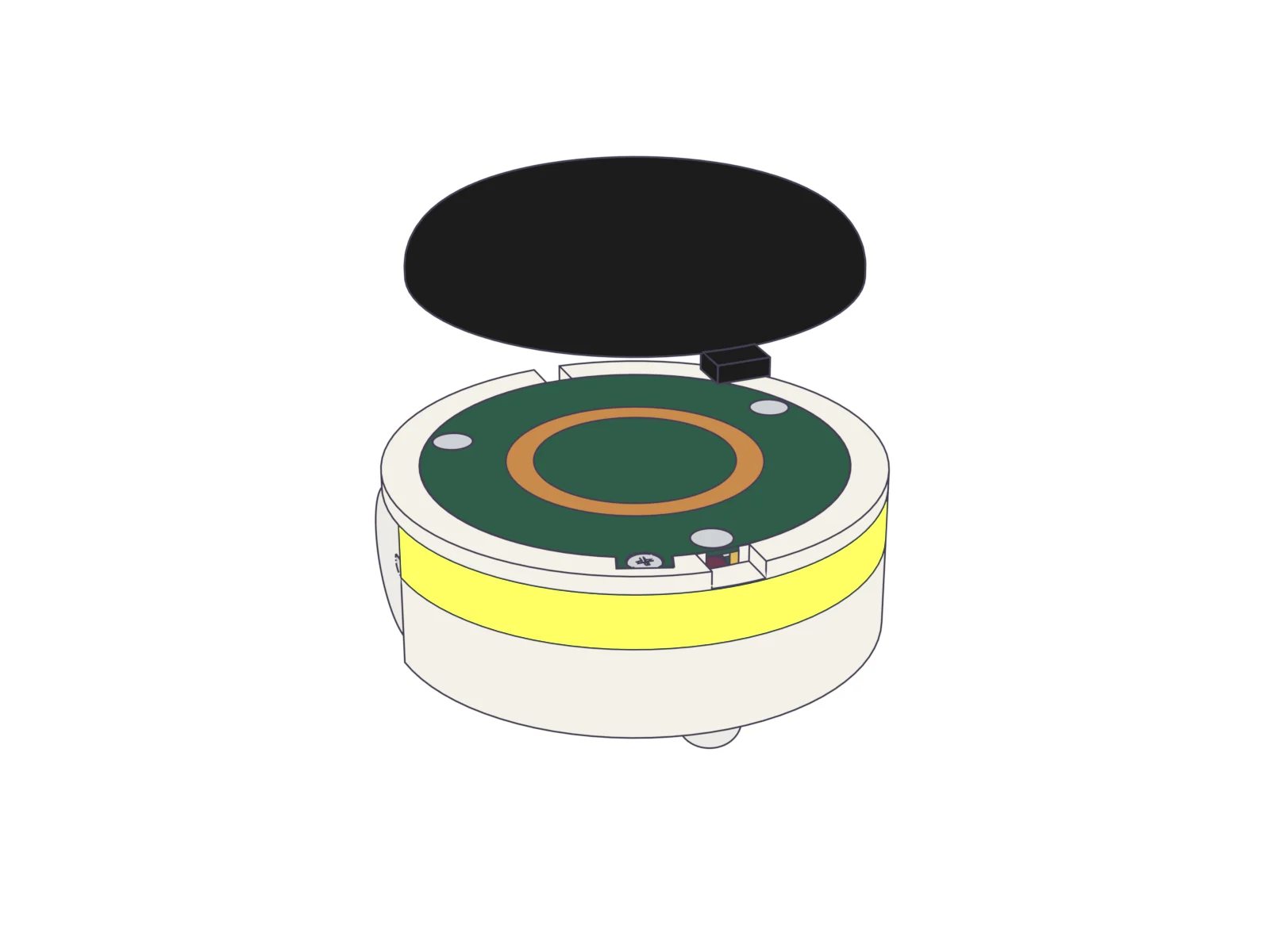
Setup 1. Place the pad in the middle of the mat: LIGHT, bright, steady. 2. Put a blind hat on four bots. Each time a blind hat is put on, the bot picks one of the eight brains at random. Nobody knows which one, not even the player who put it on. 3. Put ordinary brain hats on eight more bots, in any mix. They get in the way and make the four harder to read. 4. Set all twelve bots down on the mat.

Play 1. Watch the four blind-hatted bots. You may move the pad, add a second pad, or carry a pad around. 2. When everyone is ready, each player writes down a guess for each of the four bots (for example, "Bot by the window: Orbiter").
Check your guesses Lift the blind hats one at a time. As each one comes off, the bot's band glows for three seconds in the colour of the brain it was running. Count how many you got right, then put the blind hats back on for a new round: each bot picks a new brain.
Variant: use up to six blind hats for a harder round.
It is pleasurable and easy to create little machines that do certain tricks. … But it is much more difficult to start from the outside and to try to guess internal structure just from the observation of behavior.
— p. 20
08Reference
Rules summary
- Hats. A bot follows the brain of the hat it is wearing. Without a hat, it stays dark and still. Press a hat down firmly: the bot starts after a short moment, and its band glows white.
- Pads. A pad's signal hat decides its kind of light. A pad without a signal hat stays dark.
- Border. The border turns bots back onto the mat. Explorers drive along it for about eight seconds first.
- Leading. You may carry a lit pad a few centimetres above the mat. Bots that are drawn to it follow it.
- Patterns. Give each pattern a minute or two to form. Each game page says what to look for.
The eight brain hats
| Hat | Book | Wiring | What one bot does |
|---|---|---|---|
| Wanderer | Vehicle 1 | Both eyes to both wheels, exciting | Speeds up in light and wanders |
| Coward | 2a | Straight, exciting | Turns away from light and flees |
| Aggressor | 2b | Crossed, exciting | Turns toward light and charges it |
| Lover | 3a | Straight, inhibiting | Slows down near light and stays, facing it |
| Explorer | 3b | Crossed, inhibiting | Slows down near light, turns away and moves on |
| Valuer | 3c | A different wiring for each kind of light | Has a home, a favourite and a place it avoids |
| Orbiter | 4a | Crossed, rises then falls | Circles a light at a fixed distance |
| Ponderer | 4b | Crossed, with a threshold | Waits, then moves all at once |
Troubleshooting
| Problem | Solution |
|---|---|
| A bot does not move | Press its hat down. The band glows white when the hat is seated |
| A bot's band is grey | The bot cannot read its hat. Lift the hat off and put it back on |
| A bot's band glows dim red | The battery is low. Put the bot back in the case to charge |
| A bot slows down, or stops with its band pulsing red | It is too hot. Let it rest in the shade; it plays again when it has cooled. Keep play between 0 and 35 °C, never in direct sun |
| Bots drive off the mat | Play on the mat: the bots need its black border |
| Bots ignore a pad | Check that the pad has a signal hat, is switched on and is set to bright |
09Questions
How many people can play? One to four. Every game can be played alone, including Uphill Analysis: with blind hats, nobody knows the answers. Uphill Analysis is more fun with two or more.
Do I need an app, an account or Wi-Fi? No. Everything you need is in the box.
How long does a charge last? About 30 minutes of play, enough for three to five games.
Can we play outside? Yes, in the shade, between 0 and 35 °C. Never charge or play in direct sun, on a heater or in a hot car. A bot that gets too hot slows down, then stops with its band pulsing red until it has cooled.
How much space do I need? A table or floor area for the mat, about 100 × 70 cm.
Are the bots loud? No. The motors make a quiet whirr.
What comes after game 13? The advanced game in chapter 07. After that, invent your own patterns.
10Tinkerer's guide
This chapter is for adults who want to open a bot, change its parts, write their own brains or flash their own firmware. Nothing here is needed to play.
What you need
| Tool | For |
|---|---|
| Phillips #0 screwdriver (PH0) | Every screw in the set is an M1.4 with a PH0 recess |
| A pin or a small flat blade | The release slot on a hat's floor |
| A phone with NFC | Writing a hat (Android: in the browser; iPhone: any NFC app) |
| A Tag-Connect TC2030-CTX-NL cable and an SWD probe | Flashing firmware (optional) |
Opening a bot
- Lift the hat off.
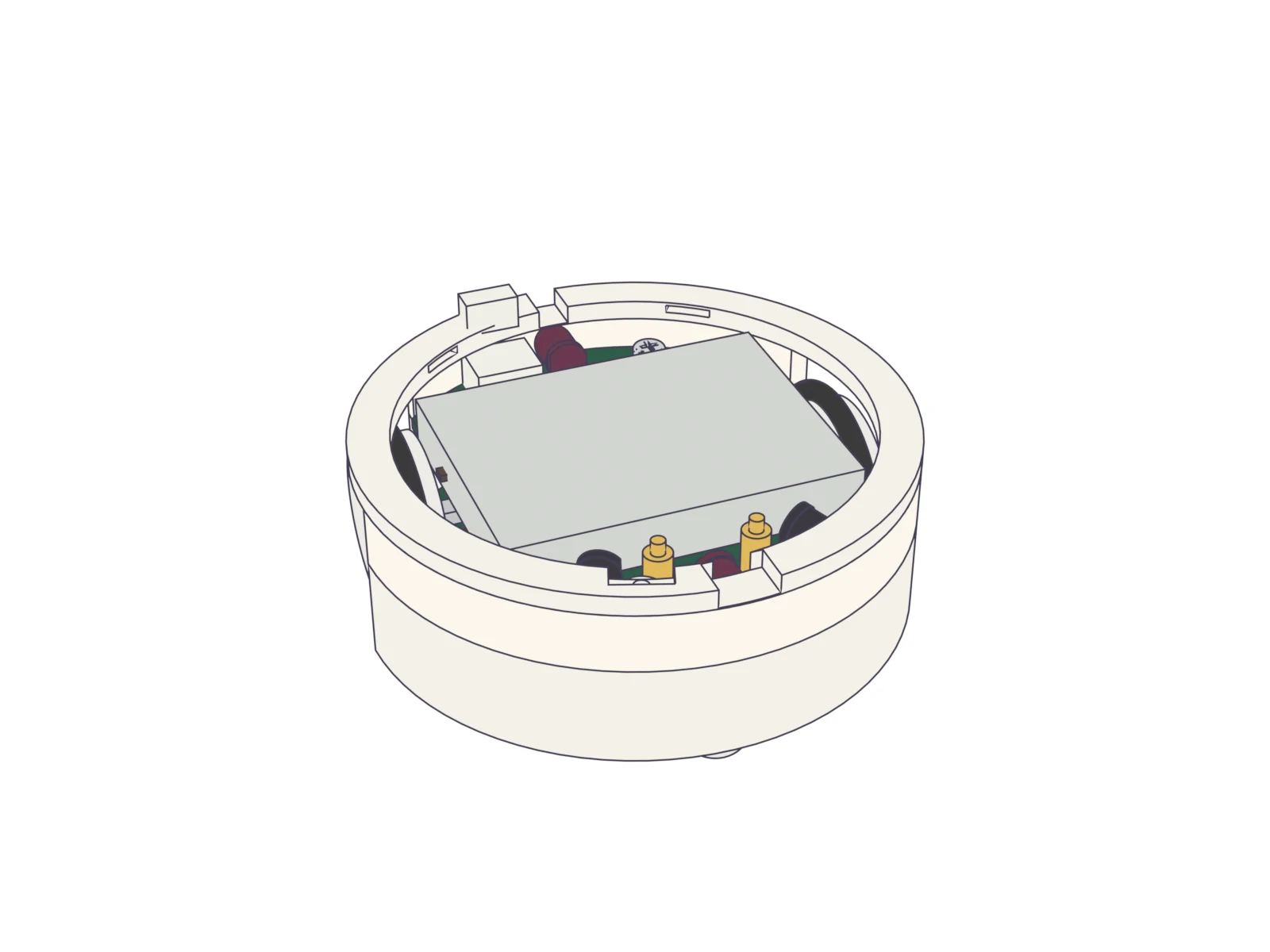
- Undo the cover's captive screw and lift the cover off its two hooks. The screw stays in the cover.
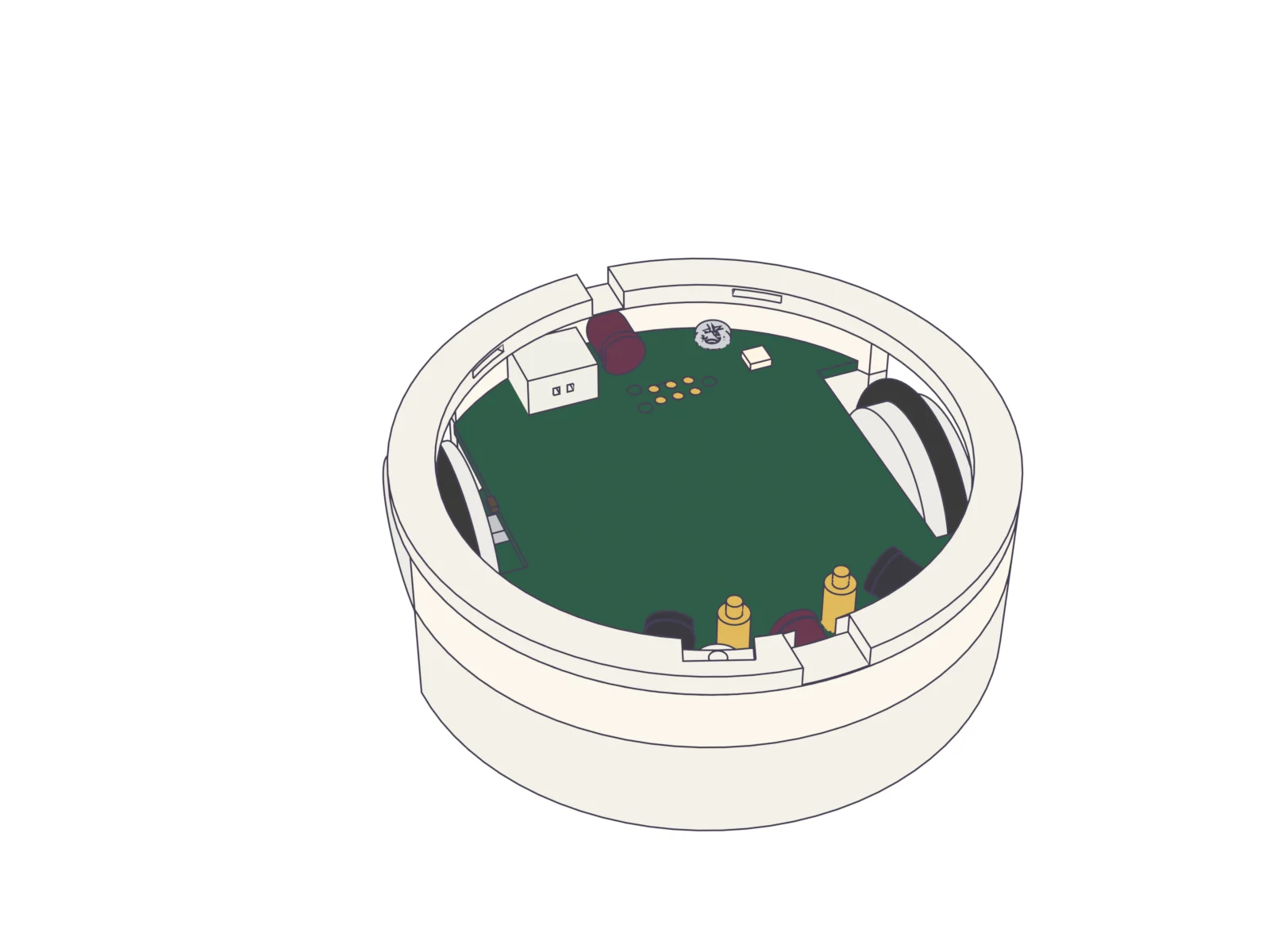
- Unplug the cell's lead from its socket and lift the cell out.
- To reach the motors, undo the three screws on the main board, unplug the motor plug and the link plug underneath, and lift the board out.
- Put it back together in reverse. The workbench's Build & repair tab shows every step in 3D.
Connectors
Every connector inside a bot and a pad is a JST SH (1.0 mm pitch). Pin 1 is marked on each board.
| Connector | Pins |
|---|---|
| Cell (bot and pad), 3-pin | 1 VBAT · 2 GND · 3 TS (the cell's thermistor) |
| Motors, 4-pin | 1 VMOT · 2 left motor − · 3 VMOT · 4 right motor − |
| Link, base board to main board, 4-pin | 1 VCHG · 2 GND · 3 floor LED · 4 floor sense |
The motors run from a fixed 1.8 V supply. Don't connect them to the cell directly.
Flashing firmware
Each bot and each pad has a Tag-Connect TC2030 footprint: six gold pads and three small holes. No connector is fitted. - Bot: the footprint is on the main board's top, at the back, under the cell's edge. Take the cover and the cell off first. - Pad: the footprint is on the pad board's top. Undo the two screws underneath and lift the board out of the lens.
| Pad | Signal |
|---|---|
| 1 | VCC (the probe powers the board at 3.3 V) |
| 2 | SWDIO |
| 3 | NRST |
| 4 | SWCLK |
| 5 | GND |
| 6 | not connected |
- Press a TC2030-CTX-NL cable onto the footprint and connect it to an SWD probe, such as a Raspberry Pi Debug Probe, a DAPLink or a J-Link.
- Install Puya's PY32F0xx device pack (Arm's pack index lists it as Puya::PY32F0xx_DFP) for pyOCD or your IDE.
- Hold the board in reset while you connect. On a bot, the two SWD pins become the NFC reader's control lines once the firmware runs.
- Build and flash the firmware in
05-firmware(see its README).
Writing a hat
Open Make a hat on the website. Start from one of the eight brains or from a blank hat, change the wires and watch a bot try it. Then tap a blank hat with your phone to write it. Tapping any hat opens its brain in the editor. The brain format (VB1, 59 bytes) is described on that page and in site/src/engine.js.
Opening a hat
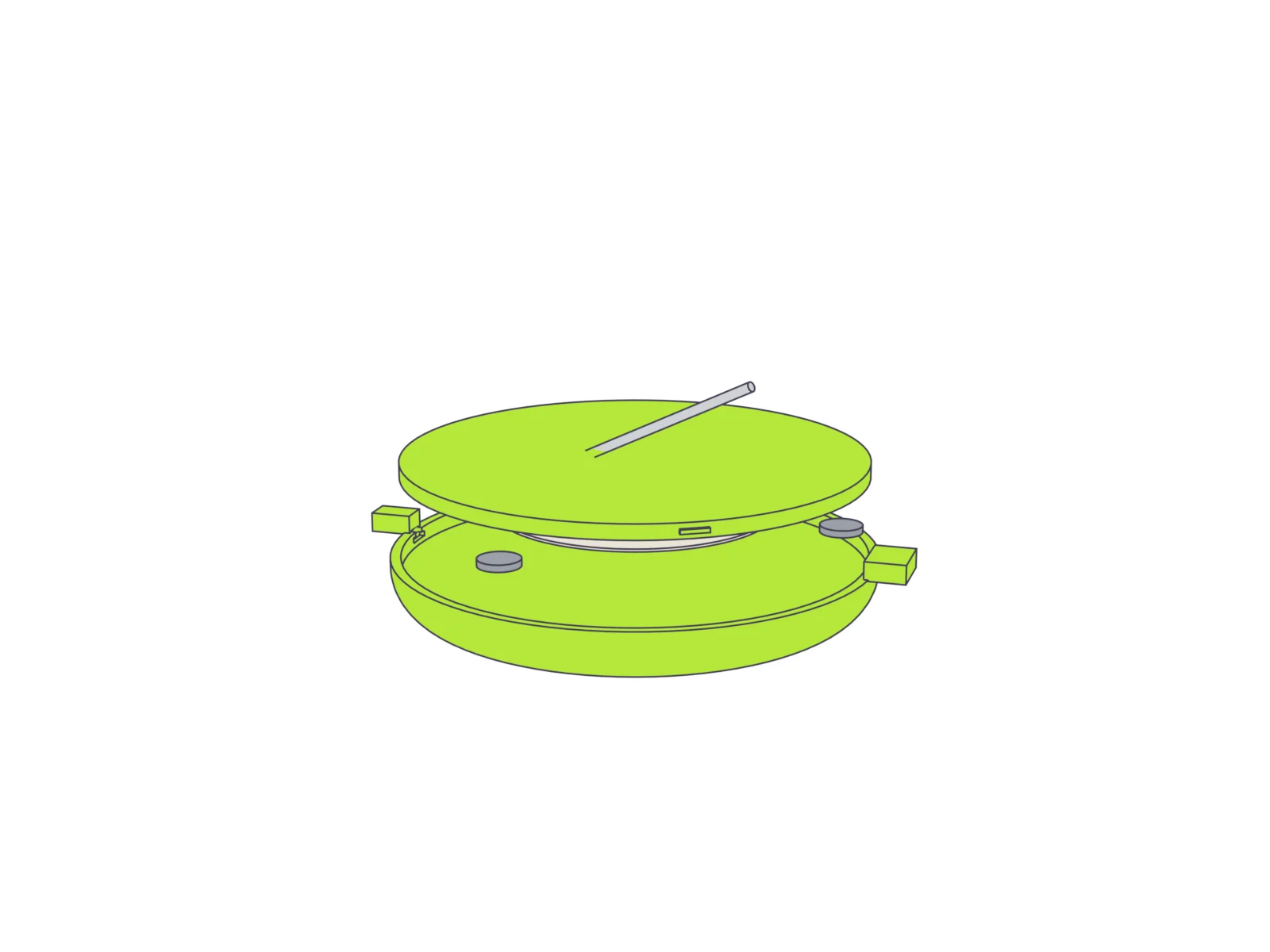
A hat is two parts that snap together. 1. Push a pin into the slot at the back of the hat's underside. 2. Lift the floor plate out. The tag and the three magnets sit in pockets under it. 3. To close it, press the floor plate in until all three snaps click. Keep each magnet the same way up as the others.
Printing your own parts
Every part is in the workbench's Files tab as STEP. These parts print well:
| Part | How |
|---|---|
| Hubs | Resin, or FDM with a 0.25 mm nozzle at 0.1 mm layers, axle up; press onto the shaft |
| Motor cradles | FDM, 0.15 mm layers, flat side down, no supports |
| Hat shell and floor | Resin; the snaps are 0.25 mm |
| Lower shell | FDM, 0.15 mm layers, rim down |
| Band | Clear PETG or clear resin |
Parts you can buy
| Part | What | Where |
|---|---|---|
| Tyres | NBR70 O-ring, 12 × 1.5 mm | Any O-ring supplier |
| Screws | M1.4 pan head, DIN 7985, PH0 | Fastener suppliers (e.g. Accu SIP-M1.4) |
| Motors | PMD 206-109, 6 mm, 136:1 | Precision Microdrives |
| Cell | 150 mAh LiPo with protection, about 20 × 26 × 3.8 mm, plus a 10 kΩ NTC | Electronics distributors |
| IR LEDs | Vishay TSAL4400 | Electronics distributors |
| Charging pins | Mill-Max 0965 | Electronics distributors |
| Connectors | JST SH (SM03B, BM04B) | Electronics distributors |
Safety
- Batteries. Use only cells with a protection circuit and a thermistor. Don't short a cell's wires, puncture it or charge one that is swollen.
- Magnets. Keep loose magnets away from children. Swallowed magnets can cause serious harm.
- Temperature. Never charge or play in direct sun, on a heater or in a hot car; keep within 0–35 °C. The firmware slows a hot bot and pauses it at a 55 °C die (
VV_HOT_*invv_bot.h, ADR-0027); keep that layer in your own firmware. - Firmware. The fence, the low-battery stop, the motor speed limit and the charging lock-out are firmware and hardware safety layers. Keep them in your own firmware.